Cannes Lions 2026: Six Strategic Shifts Reshaping the Creator Economy

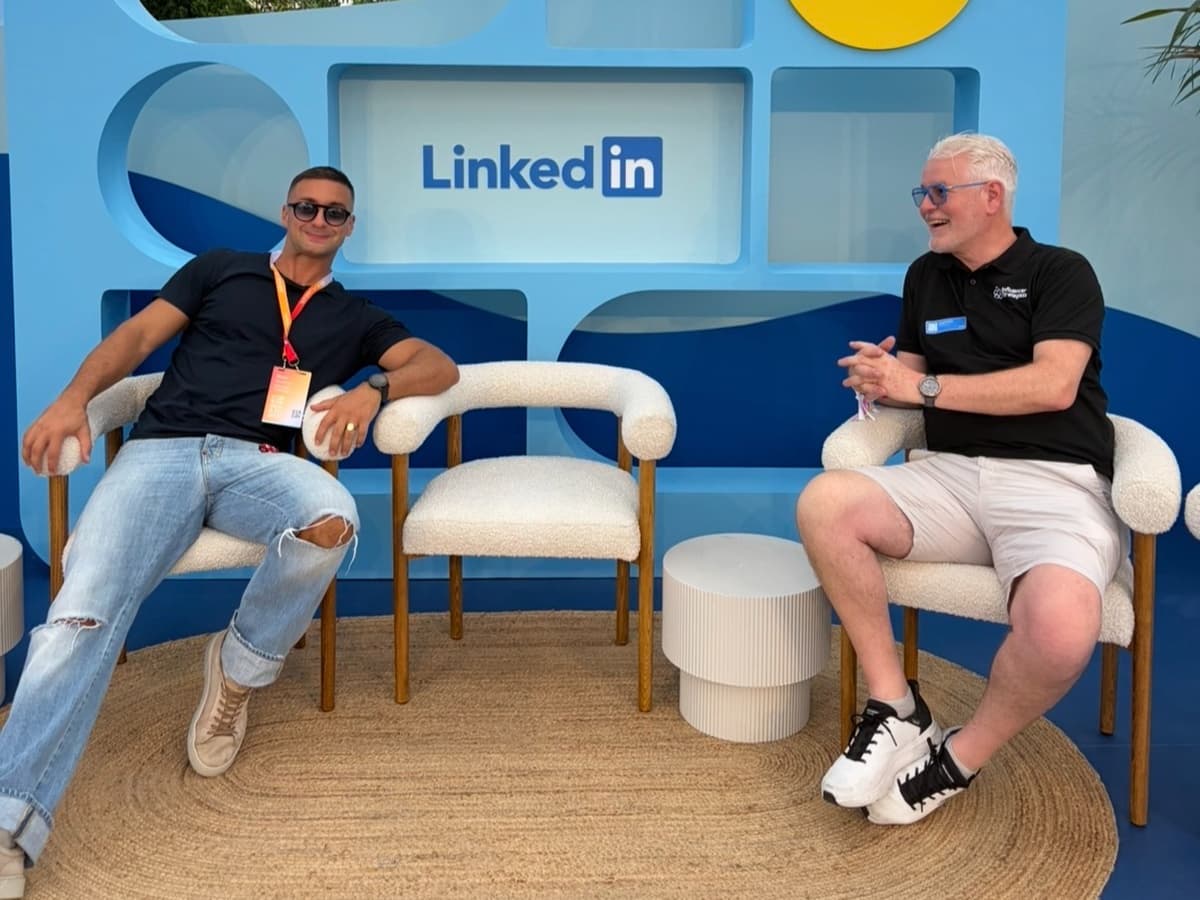
The heat hit us before the insights did.
36 degrees on La Croisette. Linen shirts soaked through by 10am. The kind of Mediterranean sun that makes you question every life decision that led you to wearing a blazer on a beach.
We told ourselves the cold rosé at lunch would help. It did not. But it did make the afternoon panels significantly more enjoyable.
The week started slowly. Monday was positioning. Everyone finding their spot. The yachts. The branded beach clubs. Cannes has a rhythm, and Monday is the inhale before the industry starts talking.
By Tuesday the conversations had sharpened. We caught Leandro Barreto's keynote and watched a room of senior marketers go quiet when Unilever's Global CMO said six words that landed heavier than any deck: "It's not about channels. It never was." He talked about Vaseline being reinvented through creator hacks that became actual products. A few people around us looked uncomfortable. Good. That is what a keynote should do.
Wednesday we were at the Dentsu Beach Club when Kenny Gold from Edelman walked over and said something that stuck with us for the rest of the week: he called this year "the festival of humanity." At a festival drowning in AI announcements, that phrase felt like someone opening a window. We kept hearing it echo in other conversations. Over cocktails. In queues. In the quieter rooms where the real exchanges happen.
The Reddit sessions were a highlight we did not expect. Laura Nestler telling a room of brand marketers to "act like a citizen, not like a billboard." You could see the performance marketers in the room recalculating their entire Reddit strategy in real time. Selma Ahmed from DAVID London called Reddit comments "the modern-day testimonial." One of those lines that sounds obvious once someone says it, but nobody had said it before.
The Kantar data dropped like a brick into every measurement conversation for the rest of the week. 15,000 creator assets analysed. Only 6% were both engaging and brand-building. Six percent. We watched three separate panels reference that number within 24 hours of it being published. It validated something we had been documenting in our own Precision Gap research: the industry tracks engagement because it is easy, not because it is meaningful.
Thursday night was our Glasshouse Edition dinner at Bâoli. Twelve seats. No panels. No slides. Just senior people from across the industry sharing what they actually think when the microphones are off. Gordon moderated. The wine was better than Monday's rosé. The conversation was better than anything on the main stage. These are the rooms where strategy actually shifts, where someone says something unpolished and real and you write it on a napkin because you know it will matter in six months.
Friday was quieter. The yachts were emptying. The Palais was winding down. But the conversations on the walk back along La Croisette were the ones that stayed.
The thing about Cannes is that the panels give you the language, but the hallways give you the conviction. You hear the same observation from a brand CMO, a platform VP, and a creator within the same afternoon and you realise: this is the consensus forming. This is where the industry decides what it believes for the next 12 months.
This year, it decided three things. Creator work is infrastructure, not activation. Measurement needs to go beyond engagement. And the human element is becoming more valuable precisely because AI is making everything else cheaper.
We came back sunburnt, sleep-deprived, and carrying more business cards than our wallets could handle. But we also came back with something we did not have before: the verified conviction that the thesis we have been building, the precision gap, the consumer intelligence layer, the shift from reach to resonance, is now the mainstream position of the industry's most senior leaders.
We wrote it all up. Thirty verified sources. Six strategic shifts.
The six shifts, in order of strategic significance:
1. Creator strategy is moving from media planning to operating model design. 2. Co-creation with creative freedom is producing measurably better outcomes than controlled briefs. 3. The measurement infrastructure remains the industry's weakest link, with only 6% of creator content building both engagement and brand equity. 4. AI is accelerating workflows while the industry draws a firm line at creative judgment. 5. B2B creator marketing and community-first strategies reached mainstream platform support. 6. The leading organisations are building permanent creator systems, moving beyond campaign-based activations entirely.
Each shift has direct implications for how brands allocate budgets, structure teams, and evaluate performance in the next 12-18 months.
Shift 1: Creator as operating model
The consensus
Six independent voices at Cannes, spanning brand leadership, influencer agency strategy, platform executives, and creators, converged on the same structural observation: creator strategy has become a way of building brand relevance, developing products, and creating cultural value. Unilever's Global CMO Leandro Barreto framed this most explicitly in his keynote:
Leandro Barreto Global CMO, Unilever
"It's not about channels. It never was."
His use of Vaseline as the reference case is strategically significant. Unilever did not use creators to promote Vaseline. Creators generated new use cases through content, and Unilever turned those use cases into products. The creator function moved upstream from distribution into product development, a shift in where value is created within the marketing organisation.
Becky Owen, CMO of Billion Dollar Boy, described the same dynamic in different terms: 'The creator economy has matured into a sophisticated media solution capable of building genuine cultural IP.' Michelle Crossan-Matos at SharkNinja extended this to commerce, preferring the term 'creator commerce' because creators now influence both what gets made and how it reaches consumers.
From the creator side, the shift was equally visible. Brandon Baum observed that creators are now the keynote speakers, and Dhar Mann captured the inversion: 'More brands want to know how creators work.' Cindy Gallop described a 'completely new energy' in how brands, agencies, and creators relate to each other.
The operating model shift has three practical consequences. First, creator budgets will increasingly sit alongside product development and brand strategy budgets, requiring cross-functional governance that most marketing organisations have not built. Second, the creator relationship becomes a long-term asset on the balance sheet of brand relevance, which changes how partnerships are valued and structured. Third, agencies that position creator work as a campaign tactic will increasingly lose to agencies that position it as an operating system for cultural relevance.
Shift 2: Creative freedom as a performance driver
A consistent pattern emerged from brand, platform, and creator voices: the organisations producing the strongest creator work are the ones that have moved from controlled briefs to collaborative creation. Google's Sean Downey articulated the mechanism clearly:
Sean Downey Ad Executive, Google/YouTube
"When they stop trying to control the message so overtly, they get really good magic."
Downey recommended that brands start creator partnerships with open briefs, describing the current best practice as experimental rather than prescriptive. Creator Adam Waheed, speaking at the same session, described the ideal dynamic as 'meeting in the middle,' a genuine negotiation where both parties contribute expertise.
Barreto reinforced this with operational specificity. In a Business Insider interview, he described Unilever's shift: 'We started understanding we should give the brand back to the communities,' allowing creators and communities to define culturally relevant use cases rather than executing pre-determined messaging. Kenny Gold, Edelman's Global Chief Creator Officer, connected this directly to outcome: 'When we create this way, we inherently drive the most powerful commodity in the world, trust.'
The Starbucks and TikTok partnership provided a concrete example. Starbucks' Senior VP of Global Marketing, Erin Silvoy, described how employees share the brand 'in authentic, creative, and unique ways,' with TikTok amplifying that employee-driven storytelling. The model inverts the traditional brief: the brand sets the direction, the creators define the expression.
The creative freedom finding has a direct implication for the content review process. Our Precision Gap research found that 81% of brands review creator content for brief alignment, while only 29% evaluate whether the content resonates with the target consumer tribe. The Cannes evidence suggests the 81% may be optimising for the wrong variable. Brief compliance produces content that satisfies the brand. Creative freedom produces content that moves the audience. The gap between those two outcomes is where performance lives.
The practical question for most organisations is governance: how to provide strategic direction while preserving creative autonomy. The emerging model, visible in both the Unilever and Starbucks examples, is to define the brand territory and consumer outcome, then let the creator determine the content approach. The brief becomes a compass, setting direction without prescribing the route.
Shift 3: The measurement gap is now quantified
Cannes 2026 produced the most concrete measurement data the creator economy has seen at the festival level. Kantar launched 'The Creator Game Plan' and analysed 15,000 creator assets. The finding: only 6% of that content was both highly engaging and strong at building brand equity.
That number deserves scrutiny. It means 94% of creator content falls into one of two categories: engaging but not brand-building, or brand-building but not engaging. The implication is that the industry's dominant KPI, engagement rate, is measuring the wrong 94%.
Kantar's Simon Atherley added context: creator content can deliver over 2x the effectiveness of traditional branded digital content, but meaningful measurement remains the central obstacle to proving ROI. The potential is high. The infrastructure to capture it is low.
Multiple C-suite voices reinforced this from different angles. PepsiCo's Jane Wakely made creative effectiveness the benchmark: 'Creative effectiveness really matters. The goal is documented business impact.' Reddit's Jim Squires reframed the CMO role itself as 'driving business relevance and business growth,' a direct move away from output-based evaluation. And LinkedIn's Heather Freeland challenged the entire B2B creative establishment: 'For too long, B2B creative has been judged by how it looks, not what it does.'
Kantar quantified what the industry has known intuitively: most creator content generates attention that does not compound into brand value. The 6% figure gives the industry a benchmark to measure against.
The convergence of Kantar's content-level analysis with our survey-level data from the Precision Gap Report creates a complete picture. On the practitioner side, 91% of teams track engagement and 9% track efficiency. On the content side, 94% of assets are engaging without building equity. The measurement gap is now documented from both ends.
The actionable implication is that teams need two types of measurement operating simultaneously. The first is campaign-level: reach, engagement, and efficiency metrics that track whether the spend is working. The second is brand-level: equity, sentiment, and consideration metrics that track whether the content is building something durable. Most organisations have the first. Almost none have the second. The 6% finding tells you what happens when you optimise only for the first.
The AI discussion at Cannes 2026 reached a level of clarity that previous years lacked. Across platform leaders, brand executives, and agency strategists, a consistent position emerged: AI is valuable for operational acceleration and should be adopted aggressively in workflows. AI is not ready, and may never be appropriate, for the creative and strategic judgments that determine whether a brand partnership earns trust. TikTok's Isobel Sita-Lumsden gave the statement that best captured this position:
Isobel Sita-Lumsden Global Head of Content, TikTok
"AI should lower the barriers to entry, not the ceiling for creativity."
Reddit's Jim Squires extended this to the operational level: AI's productivity gains should free time for 'the human judgment, the taste, the decision-making that is so critical.' The framing is precise: AI replaces the time spent on execution, which increases the time available for strategy and judgment. The human role does not shrink. It refocuses.
The cautionary voices were equally clear. Pinterest CEO Bill Ready noted that consumers are 'still trying to figure out their own tastes and preferences' around AI content, acknowledging the risk of 'AI slop' eroding platform trust. Fernando Machado, Chief Brand Officer at Chipotle, offered the sharpest formulation: using AI for creative ideation is like believing you can play guitar because you are good at Guitar Hero. And Kenny Gold described the entire festival as 'the festival of humanity', a deliberate recentring of the human element in a year saturated with AI announcements.
Havas' Mark Sinnock added a strategic dimension: 'Indifference is a real issue.' His point connects AI deployment to brand risk: in a content environment increasingly populated by AI-generated material, the brands that maintain a human creative signature will stand out precisely because everything around them looks the same. AI-generated content at scale creates homogeneity. Homogeneity creates indifference. Indifference is the opposite of influence.
The Cannes consensus aligns with our research synthesis of 80 academic studies on AI and influencer content: AI-polished content gets a 30%+ retrieval advantage in AI search engines, but consumer trust collapses when AI authorship is revealed. The defensible position, confirmed by both the academic evidence and the Cannes consensus, is transparent human-AI collaboration: AI handles the infrastructure (scheduling, analytics, optimisation, brief generation), and the human handles the conviction (creative direction, cultural judgment, brand voice, relationship management).
The practical implication is that organisations should invest in AI capability for their operations teams immediately. They should not invest in AI as a replacement for creative or strategic talent. The roles that AI accelerates (campaign coordination, reporting, creator vetting, content scheduling) are high-volume, process-driven tasks. The roles it cannot replace (brand strategy, cultural instinct, relationship trust, creative judgment) are the roles that will increase in value as AI commoditises everything else.
Shift 5: B2B creator marketing and community strategy reach platform scale
LinkedIn's announcement of its creator marketplace was one of the most consequential platform moves at Cannes. The positioning was deliberate and specific:
Sam Corrao Clanon Director of Product, LinkedIn
"LinkedIn Marketplace is not about the cheapest CPMs. It's about experts and practitioners who can speak credibly about a product."
Davang Shah VP of Marketing, LinkedIn
"The most valuable currency in the world right now is trust."
The LinkedIn positioning represents a structural investment in the same principle Ryan Prior at Modash has demonstrated operationally: in B2B, a subject-matter expert with 2,000 trusted connections delivers more commercial value than a generalist with 200,000 followers. LinkedIn is now building the marketplace infrastructure to enable this at scale, which will accelerate the adoption of B2B creator strategies across the enterprise market.
On the community side, three platform leaders converged on a consistent principle: influence is earned through participation, not purchased through placement. Reddit's Laura Nestler, EVP of Community, instructed brands to 'act like a citizen, not like a billboard.' Selma Ahmed from DAVID London called Reddit comments 'the modern-day testimonial.' DoorDash's Gina Igwe emphasised precision community selection: 'Really pick your audience correctly.'
Spotify built its entire Cannes presence around the concept of earning fan attention, with Global Head of Business Marketing Bridget Evans positioning the platform as the place to show 'what it actually means to earn fans' attention.' Pinterest's Claudine Cheever complemented this with a platform philosophy centred on action: 'People come to Pinterest to go from inspiration to action, not perform for likes.'
The convergence across LinkedIn, Reddit, Spotify, and Pinterest points to a shared strategic direction: the platforms that are growing fastest in creator adoption are the ones positioning themselves around earned trust and community participation. This has direct implications for how brands allocate platform budgets. The highest-value placements in 2027 may be the ones with the lowest CPMs but the highest trust density, which inverts the traditional media buying model.
For B2B organisations specifically, the LinkedIn creator marketplace creates a new channel that did not exist 12 months ago. Early movers who build expert creator networks on LinkedIn in the next 12 months will have a structural advantage as the marketplace scales and competition for the best B2B voices intensifies.
Shift 6: From campaign activations to permanent creator infrastructure
The most important pattern at Cannes 2026 was a language shift that appeared across brands, platforms, and creators independently. TikTok spoke about custom creator networks, purpose-built communities of creators aligned to a brand's audience. Unilever described an operating model transformation. Kantar called for standardised measurement frameworks. Brandon Baum advised creators to prioritise the connections that will still matter in 12 months: 'Cannes is just the start of the story, not the full book.'
The Starbucks model is illustrative. Their TikTok partnership is built on employee-creators sharing the brand continuously. Erin Silvoy described employees sharing in 'authentic, creative, and unique ways,' with the platform amplifying that storytelling. This is a permanent creator system embedded in the organisation, fundamentally different from a quarterly campaign with external influencers.
The creator community echoed this from their side. AI and data science creator Sundas Khalid described her Cannes strategy as proactively investing time in 'places where other creators are going to be,' building relationships for long-term professional development. Creator Mia McGrath announced post-Cannes that she would shift toward B2B content on LinkedIn, recognising that professional authority compounds differently than social entertainment.
The shift from campaigns to systems has three structural implications. First, creator partnerships need to be budgeted annually, integrated into the marketing plan alongside paid media and brand campaigns, with multi-quarter commitments. Second, the creator roster becomes a managed portfolio, analogous to a media portfolio, with performance tracked at the relationship level over time. Third, the internal team structure needs a dedicated creator operations function that maintains the network between campaigns, manages the content pipeline, and owns the measurement infrastructure.
The organisations that build this infrastructure in the next 12 months will have a compounding advantage: every campaign builds on the relationships, content library, and performance data from the previous one. The organisations that continue to operate project-by-project will start from zero each time, which becomes increasingly expensive as the best creators are retained by competitors on annual contracts.
What the Grand Prix jury rewarded
The Social & Creator Lions Grand Prix went to 'Could Have Been a Heineken' by LePub Milan. Jury President Mihnea Gheorghiu praised the work for its 'social-first simplicity and iconicity,' specifically for transforming a digital habit into 'the oldest social behaviour.'
The jury's rationale is instructive because it reveals what the industry's highest creative authority considers excellence in creator-era marketing. The award did not go to the biggest creator partnership, the highest reach campaign, or the most technically sophisticated AI integration. It went to a simple social insight that changed physical behaviour between people. The winning criterion was behavioural impact, the point where content stops being content and starts reshaping how people interact in the real world.
This aligns with the broader Cannes pattern: the festival rewarded creator work that operates at the intersection of culture, behaviour, and commerce. Vaseline's creator-led product development, Starbucks' employee-creator system, and the Heineken Grand Prix all share a common thread: they moved beyond content distribution into behavioural change, product innovation, and cultural participation.
The Grand Prix signals where the standard is heading: creator work that changes what people do, how products are developed, and how brands participate in culture. Reach and engagement are inputs. Behavioural and commercial impact are the outcomes the jury evaluated.
Next 12-18 months?
The convergence of 30+ independent voices across brands, platforms, agencies, and creators produces five strategic priorities that practitioners should act on:
1. Redesign the brief as a compass, not a script. The evidence from Google, Unilever, and the Grand Prix jury is consistent: the highest-performing creator work comes from open collaboration, not controlled execution. Brands should define the strategic territory and consumer outcome, then allow the creator to determine the content approach. This requires governance models that most organisations have not yet built, which is where early adoption creates advantage.
2. Add brand equity measurement alongside engagement tracking. Kantar's 6% finding means that 94% of creator content generates attention without building durable brand value. Organisations that track only engagement are optimising for the 94%. Adding brand lift, sentiment, and consideration metrics to every creator programme identifies the 6% that compounds.
3. Build annual creator infrastructure, retire campaign-by-campaign activation. The leading organisations at Cannes, Unilever, Starbucks, TikTok, are building permanent creator ecosystems. Annual budgets, portfolio management, always-on content pipelines. The cost of starting from zero on every campaign is rising as the best creators sign exclusive or priority agreements with forward-planning brands.
4. Invest in B2B creator relationships before the marketplace scales. LinkedIn's creator marketplace will bring competition to a space that is currently uncrowded. The 12-month window before full-scale adoption is the window for building relationships with the subject-matter experts who will become the most sought-after B2B creators. First-mover advantage in B2B creator marketing is real and time-limited.
5. Deploy AI for operations, preserve humans for trust. The Cannes consensus was unanimous: AI accelerates campaign coordination, analytics, scheduling, and content optimisation. AI does not replace creative judgment, cultural instinct, or the trust that determines whether an audience acts on a recommendation. Organisations that deploy AI aggressively in operations while investing in human talent for strategy and creative will achieve both efficiency and effectiveness. Those that attempt to automate the trust layer will discover, as Bill Ready warned, that consumers can tell.
Sources: 30+ verified speeches, interviews, and publications from Cannes Lions 2026 including Business Insider CMO Insider series, Digiday, ETBrandEquity, TikTok Newsroom, Pinterest Newsroom, Spotify Newsroom, Reddit for Business, Kantar, and LinkedIn for Marketing. Full source log with direct URLs available on request.