How Ryan Prior Grew Modash with B2B Influencer Marketing
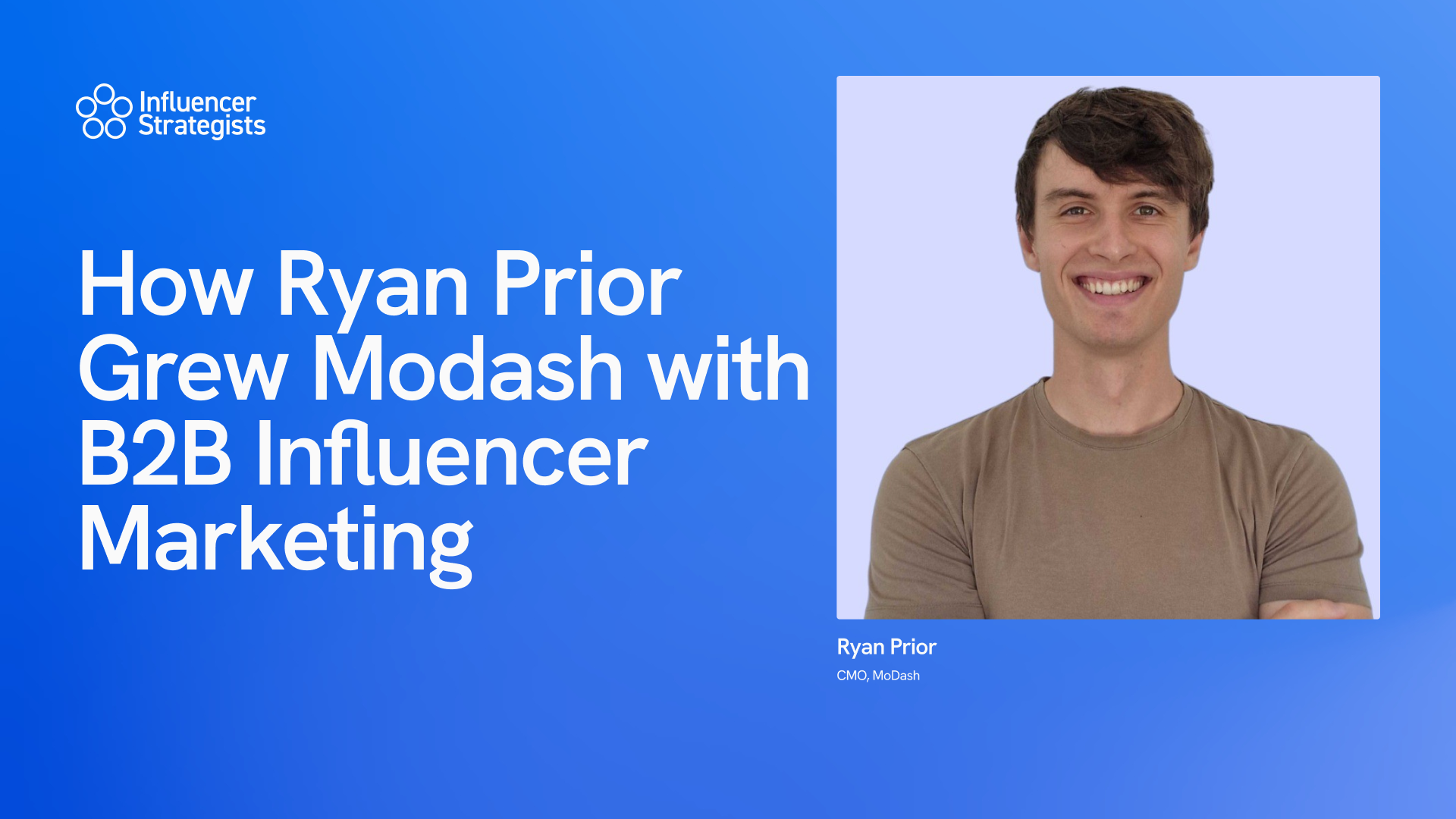
B2B brands are told influencer marketing is a B2C game, but Ryan Prior has built it into a core channel at Modash, the B2B influencer marketing software. In this conversation with host Gordon Glenister, he walks through how the partnerships program scaled, why he runs it on LinkedIn and on a paid-only basis, how he thinks about relevance over reach, and the layered way he measures something that has no clean last-click ROI. The highlights below capture the practical playbook.
Key highlights
Partnerships now account for 10 to 20% of Modash's total marketing investment, scaling from 2 to 4 collaborations a month at launch around 18 months ago to 30 to 40 plus today, with a dedicated team member running it.
LinkedIn is the number one channel and has been since day one, with newsletters number two and stronger for clicks, since LinkedIn's algorithm suppresses outbound links, while YouTube, TikTok, and Instagram are newer additions used mainly for fresh reach.
Being early is a real edge: for many partners Modash is their first ever sponsor, and B2B buyers specifically want peer opinions and proof from people who actually use the product.
Two partner types run side by side: creators with large audiences such as Sophie Miller of Pretty Little Marketer, who has 500,000 plus followers, for reach, and expert users with as few as 2,000 to 3,000 LinkedIn followers, because in B2B a tightly relevant audience beats raw size and each prospect is worth more.
Every collaboration is paid, with no affiliate or commission-only deals, for four reasons: LinkedIn drives few clicks, commission-only is too risky to attract the best partners, it cedes control of brand positioning, and last-click attribution makes no sense when a purchase can involve around 100 touchpoints and buyers switch tools only every 2 to 3 years.
Measurement is about deciding whether to keep, stop, or scale rather than a single ROI number, using layered signals from per-post reactions, job titles, and companies, to CRM-matched impressions from thought-leader ads and LinkedIn mentions on recorded sales calls, up to overall customer acquisition cost and branded search growth.
Branded search is benchmarked against the category: if the overall category is growing by 10%, Modash's branded search has to grow faster than 10% to count as winning rather than just riding the wave.
On the future, Ryan Prior is skeptical of recurring predictions like pricing standardization or chief influencer officers, and instead hopes to see influencers integrated into a consistent, whole-funnel brand strategy rather than run as a siloed, short-term performance channel.