Love Island headline sponsorship
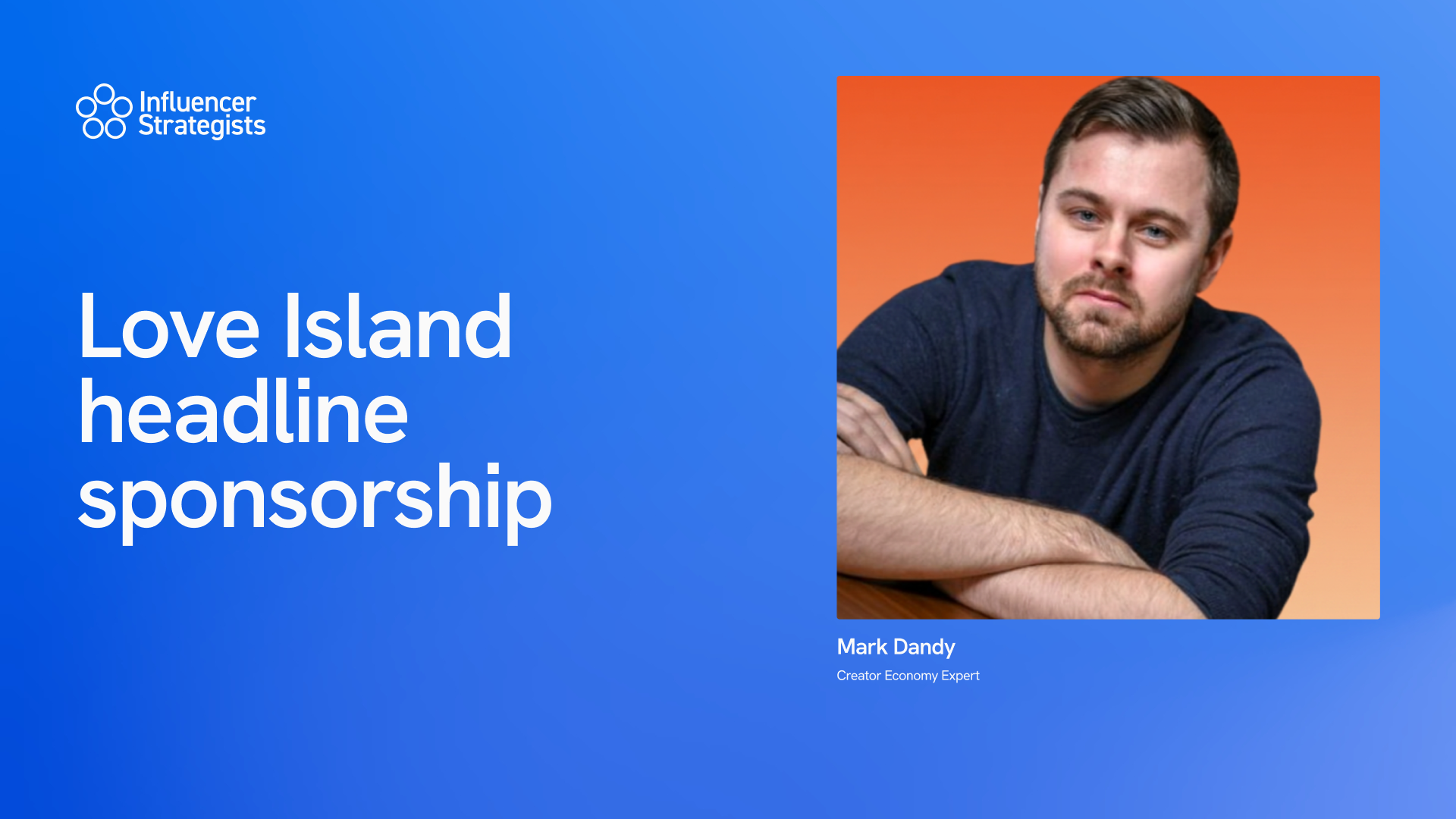
Most influencer campaigns go wrong before they start, when a brand asks one activation to deliver reach, clicks, and sales all at once. In this Influencer Strategists session, host Gordon Glenister talks with Mark Dandy, who has spent around nine years in the space, founded multiple influencer agencies, and worked with brands like Spotify, Nike, PlayStation, and Coca-Cola, about the frameworks he uses to set campaigns up properly. The conversation moves from objective-setting and the Get To By framework to a Love Island case study with hard numbers, and on to where pricing and social search are heading.
Key highlights
Dandy sorts campaigns into three objective types, awareness and engagement, call to action, and conversion, and warns that brands often want all three at once when success comes from honing in on one clear objective.
His Get To By framework forces clarity: get a defined audience profile to take an action by doing a specific thing, for example getting Gen Z women to see a fashion brand as their go-to by using talent to show the behind-the-scenes design of the next collection.
The market has come full circle from specialist influencer agencies back to integrated ones, placing influencer content at the heart of the full mix across TV, out-of-home, digital, and paid social rather than treating it as a standalone channel.
In a Love Island case study, a fashion brand sponsoring the show cast its own loyal influencer ambassadors in the TV ad and on out-of-home billboards instead of actors and models, with those influencers reacting live online every time the ad aired.
Swapping model shots for influencer and show content on the website drove a 40% uplift in add-to-basket value and a 27% uplift in sales value.
A single like can power a full omnichannel funnel: a like on a Molly-Mae post triggers retargeted ads, a 10% off welcome email, a follow-up 20% off ad, and eventually geo-targeted digital billboards placed where purchase data shows a style is trending.
Algorithms have shifted from showing who you follow to surfacing interest-based content, and with 15% of all product discovery now happening on TikTok and rising yearly, brands are moving into social SEO to influence how they rank in search.
To win that social search volume, brands are scaling from 5 to 10 influencers per campaign to 50 to 100, which is lifting demand and prices for micro-influencers, keeping macro names high, and squeezing the mid-tier in between.