Omnichannel Strategies for Influencer Campaigns
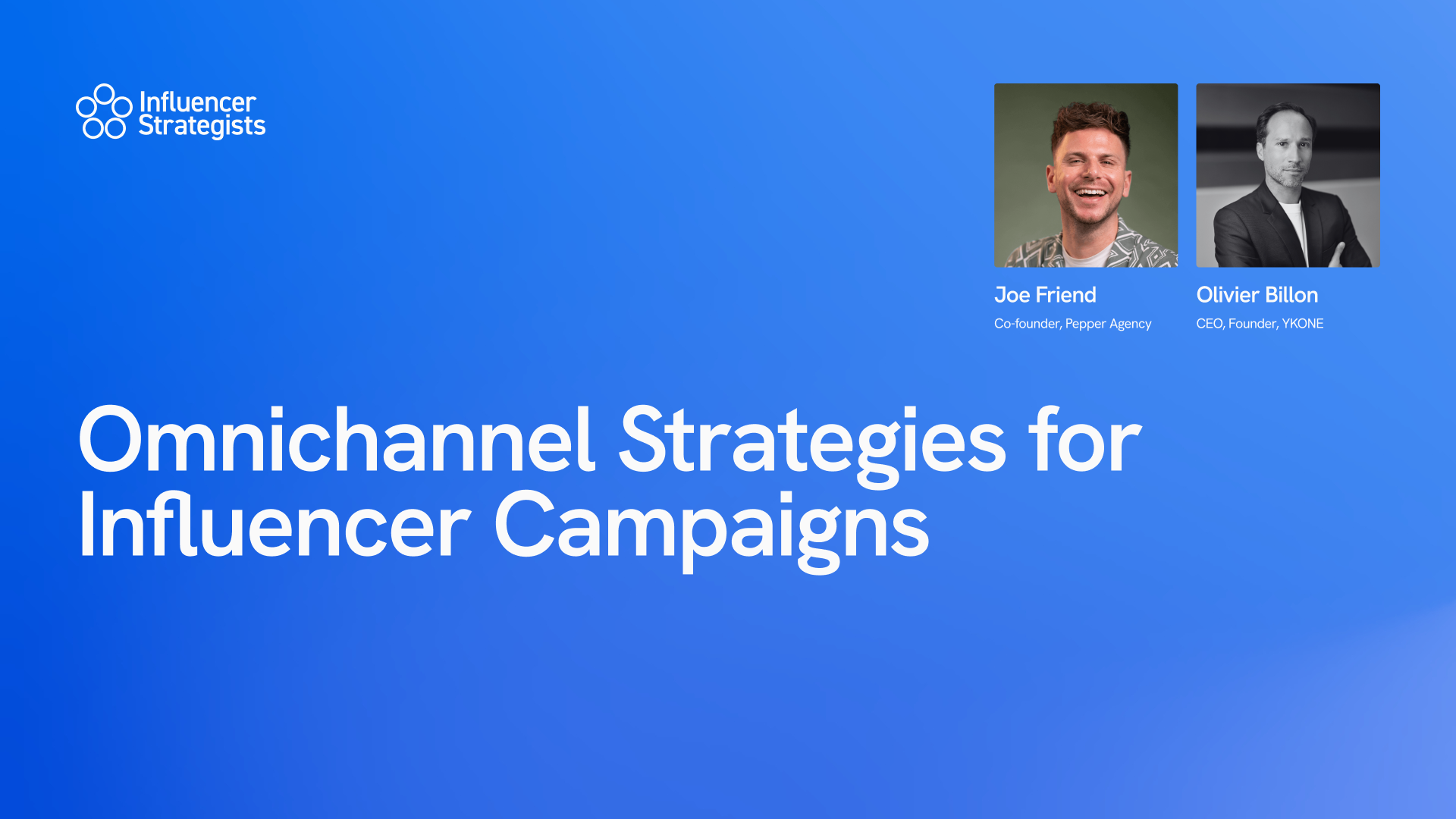
Influencer marketing is moving from a standalone channel to creator assets woven across paid, owned, retail, PR, and CRM, yet many teams still use creators in isolation. In this Influencer Strategists session, hosts Gordon Glenister and Djanan Kasumovic are joined by Olivier Billon and Joe Friend of Pepper to unpack what omnichannel actually looks like in practice. The throughline is to challenge the brief: question the budget, the decision level, and the audience need before deciding which channels to use, then build one overarching creative that adapts across touchpoints while staying consistent. The campaigns and figures below show how that reframing changes both the work and the results.
Key highlights
Trust in influencer product recommendations rose 12% from 2022 to 2024, even as trust in brands, institutions, and politicians kept falling, the core case for integrating creators across the media mix.
Olivier Billon reframed a six-figure influencer brief for a Bioderma product's 30th anniversary into a multi-million, company-wide omnichannel partnership with Victoria Beckham, which sold a few million bottles.
Challenging the brief is the unlock: Billon describes turning one campaign from 1 million to 150 million once it shifted from a siloed deliverable approved by the brand to an omnichannel play approved across every team and market.
Joe Friend's Care Bears research across five territories (US, UK, Australia, Mexico, Thailand) found 72% of the audience spend over six hours a week on social, 64% save content featuring a product or recommendation, 53% buy only after further research, and just 14% buy immediately.
That 14% immediate-buy figure argues against over-indexing on click-to-buy calls to action, since most value comes from longer-lasting creative impact rather than instant conversion.
Dove's Real Beauty platform has run for about 35 years without really promoting the product, instead tackling societal issues such as diversity and now challenging TikTok's Bold Glamour filter, which is why it earns organic reach across news, email, and social.
Pepper's Financial Times work built an editorial exchange where ambassadors like Simon Squibb hand-pick and co-write a bespoke article live behind the paywall for 24 hours, with the social content repurposed into the FT's CRM in short form.
Halo effect over direct attribution: a US brand using around 60 influencers in its first quarter saw a 56% increase in people searching its brand on Google, plus adjacent order growth, even though the lift could not be directly attributed.
For Abu Dhabi, Billon's agency brings roughly 3,500 influencers a year driving around 30 billion impressions, and a BCG or McKinsey analysis using airport surveys on trip inspiration found influencer the most effective channel.
On measurement discipline, Billon argues spend should sit about 6 to 8 times below expected EMV, targets invoice value of 5 to 8 times marketing spend, and prefers perception and sentiment over visibility, noting one Morocco client rejected 60% of submitted content as not good enough.
A new buyer behavior is emerging: ChatGPT now indexes Instagram, so brands need social SEO and should sponsor the top-ranked creators in a niche to own the answer when consumers ask AI tools for recommendations.